

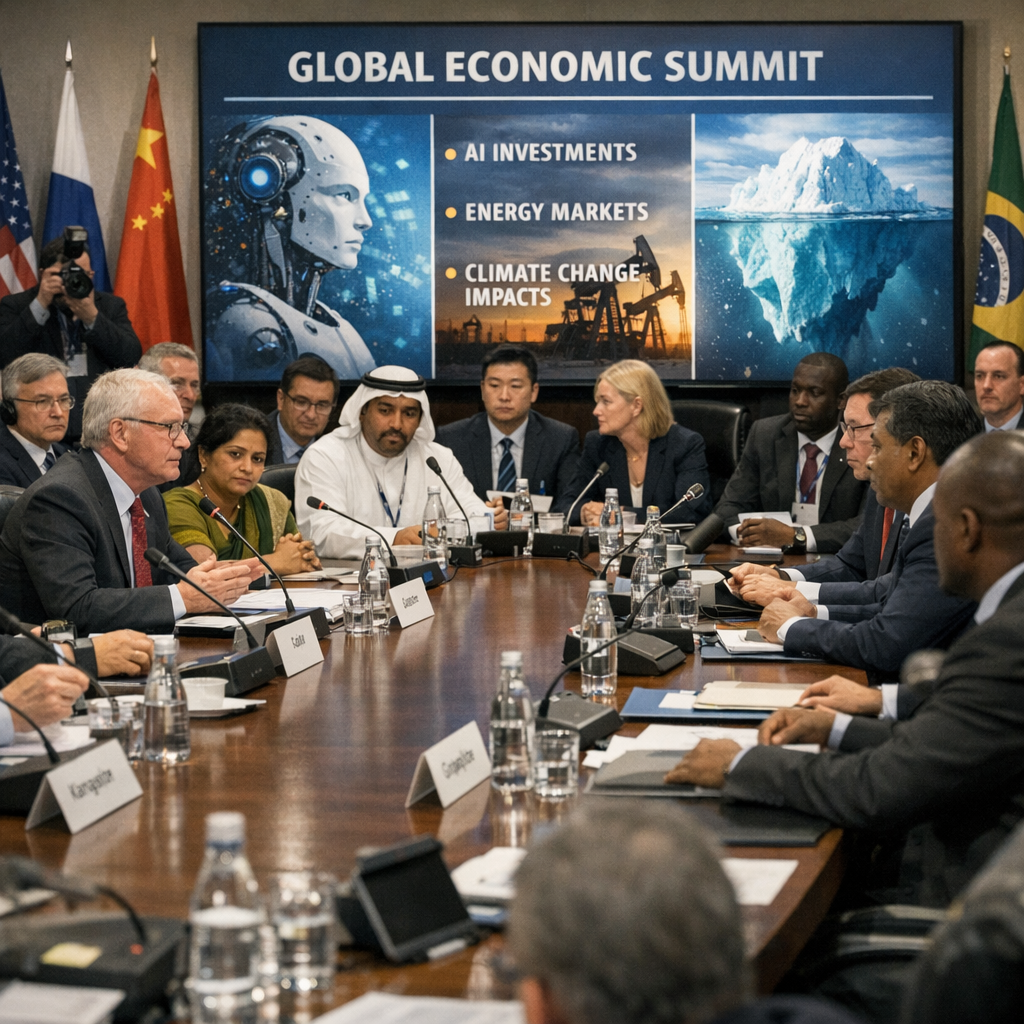
The global economy is currently navigating a complex landscape shaped by technological advancements, energy market dynamics, and environmental challenges. Understanding these factors is crucial for grasping the broader economic context.
Artificial Intelligence: A Catalyst for Growth
Investments in artificial intelligence (AI) are significantly influencing economic trajectories. In the United States, AI-related capital expenditures are bolstering growth, with consumer spending and business investments in AI driving economic resilience. This trend underscores the transformative potential of AI across various sectors.
Energy Market Volatility and Economic Implications
Fluctuations in energy prices, particularly due to geopolitical tensions, are impacting global economic stability. Recent conflicts in the Middle East have led to increased oil prices, affecting economies worldwide. For instance, the Organization for Economic Cooperation and Development (OECD) noted that the global economy, which had shown robustness, is now facing a test of its resilience due to intensified conflicts in the Middle East.
Climate Change: An Economic Imperative
Climate change continues to pose significant economic challenges. Studies indicate that anthropogenic climate change has reduced global agricultural total factor productivity by about 21% since 1961, equivalent to losing the last nine years of productivity growth. This highlights the pressing need for sustainable practices and policies to mitigate economic losses.
Looking Ahead
As the global economy contends with these multifaceted challenges, proactive measures and international cooperation are essential. Embracing technological innovations, stabilizing energy markets, and addressing climate change are pivotal steps toward fostering a resilient and sustainable economic future.